medicalverge

Definition of drug

W.H.O. Definition of Drug “Any substance or product that is used or intended to be used to modify or explore physiological systems or pathological states for the benefit of the recipient.” Conventional definition of Drug Drug is a substance used for the prevention, diagnosis or treatment of a disease in human beings or animals. But, […]

Definition of drug Read More »
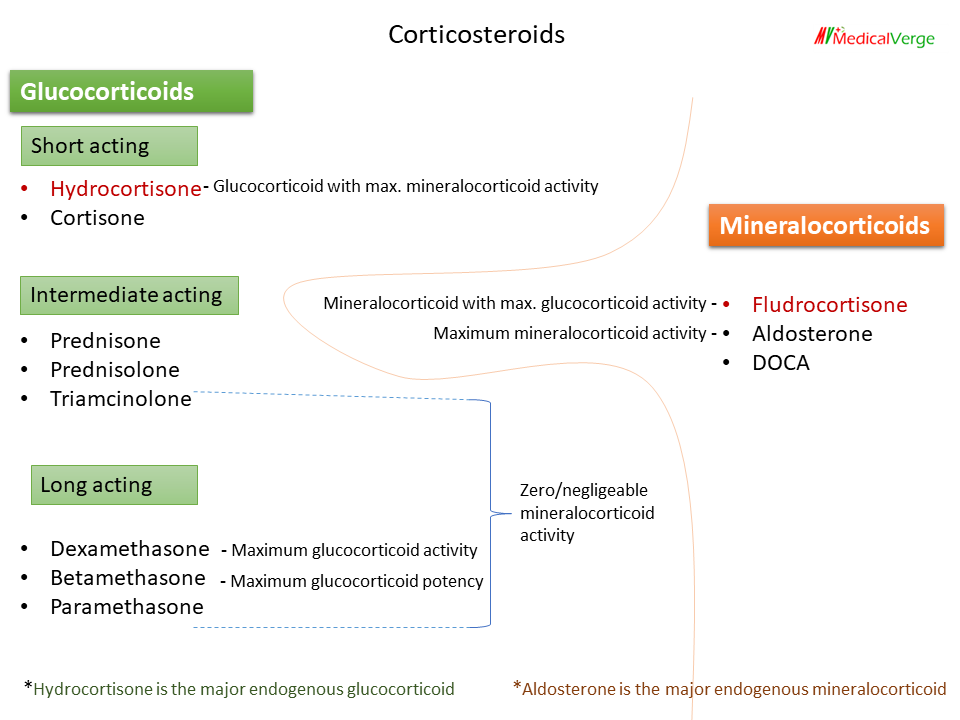
corticosteroids list

Corticosteroids: action, uses, side effects & steroid withdrawal syndrome

Steroids or Corticosteroids are hormones produced by the adrenal cortex and are necessary for various physiological functions in the body. The terms ‘corticosteroid’ and ‘corticoid‘ are used interchangeably to refer to natural gluco- and mineralo-corticoids, and their synthetic analogues. Hydrocortisone is the major endogenous glucocorticoid, whereas aldosterone is the major endogenous mineralocorticoid. The key role of

Corticosteroids: action, uses, side effects & steroid withdrawal syndrome Read More »

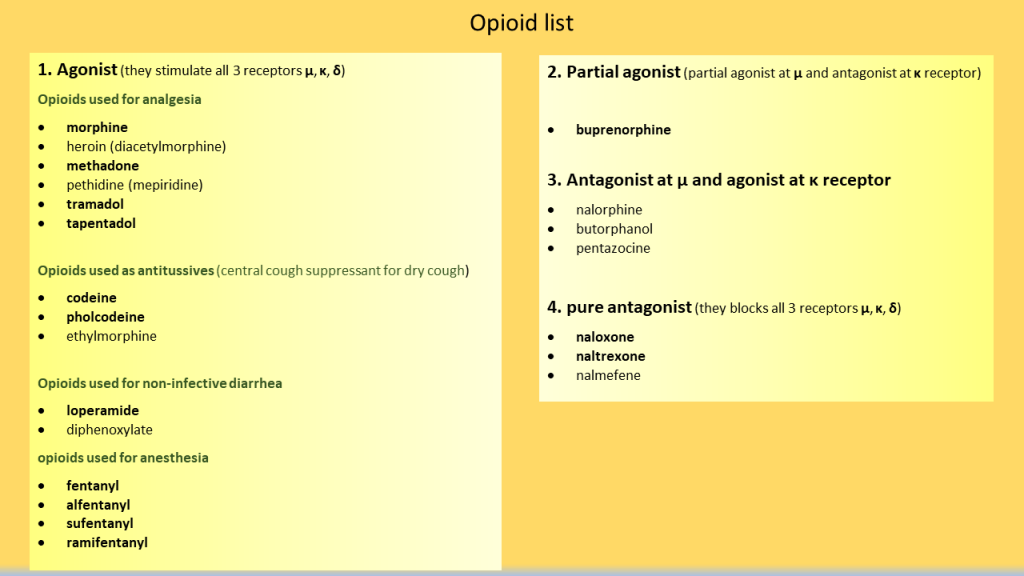
opioids list

Opioids: classification, uses, action and dependence

Drugs derived from opium (poppy plants) are called opiates e.g., morphine, while opiates like substances are called opioids. Opioids are semi-synthetic or synthetic substances having similar characteristics and the ability to interact with opioid receptors in the brain. There are 3 receptors µ (mu), κ (kappa) and δ (delta) for opioids. All three receptors (µ,

Opioids: classification, uses, action and dependence Read More »

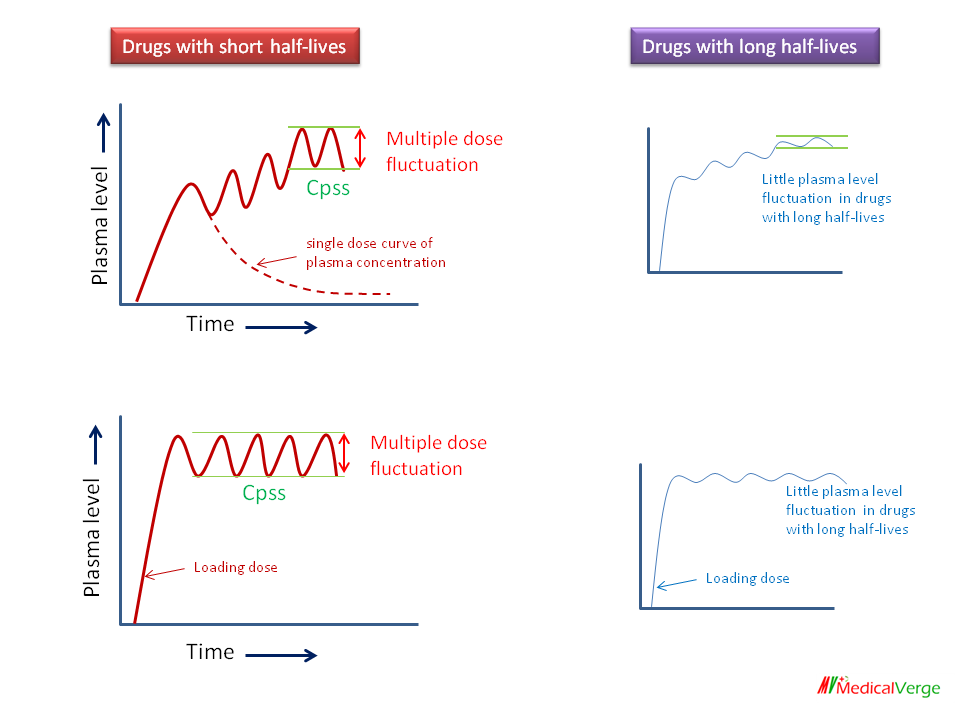
chronobiology image

Chronopharmacology: the effect of drugs upon timing.

It is a field in which drug administration is synchronized with the biological rhythm in order to optimize the therapeutic effect while minimizing side effects. A collective knowledge of variation in disease intensity and exacerbation, impact of circadian rhythm on the efficacy and safety of medication constitutes the rationale for a novel pharmacological approach.

Chronopharmacology: the effect of drugs upon timing. Read More »

hybridoma technique flowchart

Hybridoma technique: procedure and advancement

Hybridoma technique is the most favored and efficient method for exploring and producing  monoclonal antibodies (mAbs). At present, The majority of the mAbs approved by the US-FDA are manufactured utilizing hybridoma technique. It is introduced by Kohler and Milstein in 1975 and got the Nobel prize in 1984. OKT3 (muromonantibody) against CD-3 is the first

Hybridoma technique: procedure and advancement Read More »

Immunotoxins: structure, mechanism, uses and limitations

Immunotoxins are a new class of large molecules and targeted anticancer drugs. It is a conjugated protein containing an antibody, growth factor, or cytokine that binds directly to target cells and toxins (e.g. Diphtheria toxin) joined together with a pH-sensitive cross linker that serves as a disulfide bond in between. Like “magic bullets,” it destroys

Immunotoxins: structure, mechanism, uses and limitations Read More »

Anticancer drugs classification

Anticancer drugs are divided into two categories: cytotoxic (non-specific) and targeted (specific). Since cytotoxic anticancer drugs are unable to distinguish between cancer cells and naturally rapidly dividing normal cells in the body, they cause side effects such as bone marrow suppression, alopecia, and diarrhea. Alkylating agents, platinum compounds, anti-metabolites, mitotic spindle inhibitors, topoisomerase inhibitors, and

Anticancer drugs classification Read More »